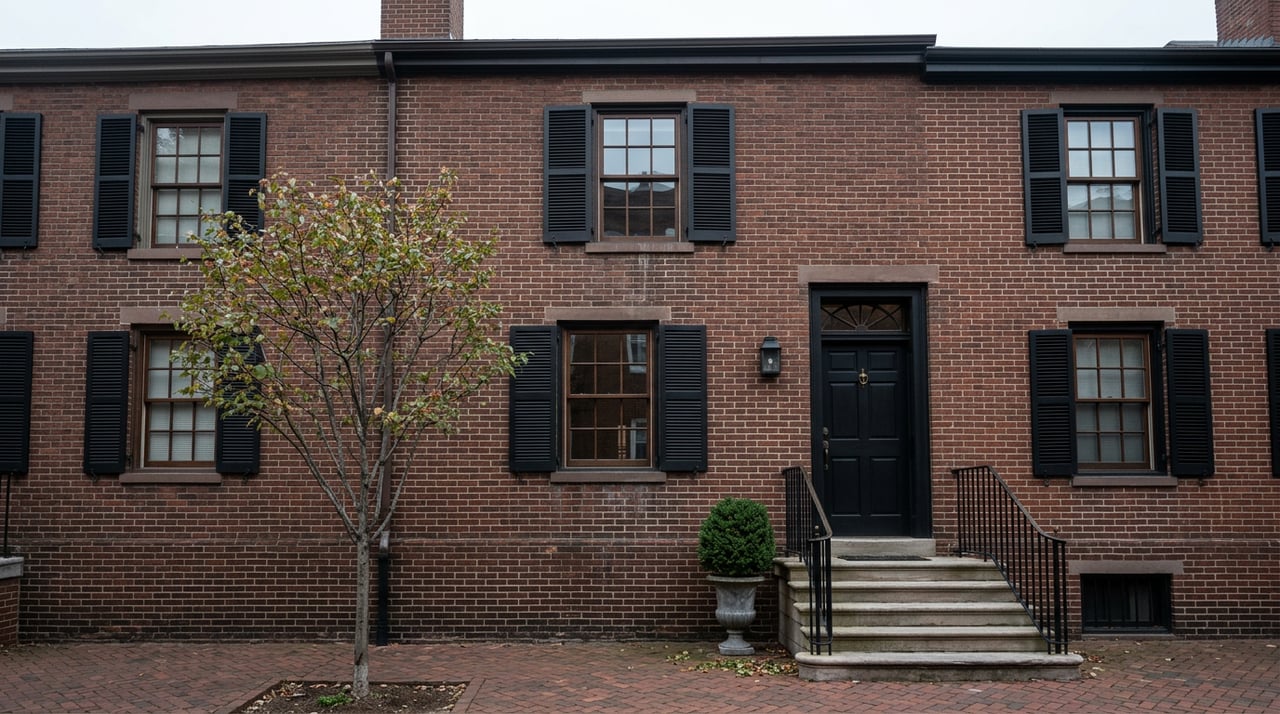
"We often think of ourselves as stewards," Mark Kiefer, chairman of the Beacon Hill Architectural Commission and a 35-year resident of the neighborhood, has said of the board he leads. It is a generous way to describe a body that can fine a homeowner up to $1,000 a day for painting a door the wrong color without permission. It is also, if you are about to buy on the Hill and you have already sketched out the renovation in your head, the wrong question to be asking. The right one is narrower and easier to overlook: what has already been approved on this house, and how much runway is left on it.
Most Beacon Hill buyer guides stop at the sentence every agent already knows to say: the neighborhood is a historic district, so exterior changes need sign-off from the Beacon Hill Architectural Commission. That much is true and mostly useless, because it tells you nothing about the two things that actually decide whether your plan works: what the commission will and won't approve when you get specific, and whether an approval that came with the house is still valid by the time you're ready to use it.
The Split Nobody Explains Precisely
Boston's own guidance for the district is clear on the boundary. All exterior work visible from a public way is subject to BHAC review, and "public way" is defined generously: it includes views from Boston Common, the Public Garden, Storrow Drive, the Charles River Esplanade, and the Longfellow Bridge, not just the sidewalk directly in front of the house. A rear addition you assumed was private because it faces a courtyard may still be visible from one of those vantage points, which puts it back under review.
The other half of the split is the one buyers usually get right by instinct but rarely confirm in writing: interior work is exempt. The Beacon Hill Civic Association's own homeowner guidance says as much directly, residents making interior modifications do not need a Certificate of Appropriateness and don't submit anything to the commission at all. That distinction matters more than it looks. If the renovation that makes a listing work for you is a new kitchen layout, a gut of the primary bath, or opening up a wall between two rooms, you're clear. If it's a bigger window, a rear deck, or visible mechanical equipment, you're in commission territory, and the guidelines get specific fast.
What "No Low-E Glass" Actually Costs You
Here is the detail that catches buyers who assume "updated" means the same thing on Beacon Hill that it means everywhere else. The district's architectural guidelines require true divided lights on replacement windows, a dark spacer bar, a minimum muntin depth, and only clear, non-tinted glass. Mirrored or tinted heat-reflective glazing is explicitly ruled out. In practice, that means the low-emissivity coatings standard on most modern replacement windows, the ones that actually cut heating and cooling costs, are off the table on anything facing a public way.
This isn't a rule buried in a decades-old PDF that nobody enforces anymore. It shows up, verbatim, in this year's approvals. A window case decided earlier this year at 37 Beacon Street approved a side-elevation sash replacement on the condition that it use no low-E glass, painted to match the existing window. If your renovation math assumes you'll recoup part of the cost through lower utility bills once the windows are "done," check that assumption against the address, not against the national average.
A few cases from this year's hearings, drawn straight from BHAC's own agendas and meeting minutes, show how specific the commission gets and how differently similar-sounding requests can land:
| Address | What was proposed | What the commission decided |
|---|---|---|
| 37 Beacon St | Replace one side-elevation window | Approved, no low-E glass, paint to match existing |
| 19 Chestnut St | Restore front windows, repair brickwork, repaint entry surround | Approved, paint colors matched to specific Benjamin Moore codes |
| 61 Mount Vernon St | Replace thirteen sash sets on the rear elevation | Approved, true divided light and clear glass required, existing jambs and moldings retained |
| 14 Beacon St | Full facade restoration, masonry and cast-iron balconies | Approved as submitted |
| 107 Charles St | Relocate HVAC equipment and leader lines, rear elevation | Denied without prejudice, sent back to explore a design that blends better with the brick |
That last row is worth sitting with. The 107 Charles Street case wasn't rejected because the commission objected to HVAC equipment existing. It was sent back because the first design didn't hide it well enough, and the applicant was given the chance to return with something better rather than being shut out entirely. That's the pattern across most denials in the record: not a hard no, but a note to come back with a version that respects the building. It costs a hearing cycle, sometimes two, but it isn't usually fatal.
The Approval That Comes With an Expiration Date
Once a project clears the commission, the decision letter becomes the paperwork used to pull the building permit, and that Certificate of Appropriateness is valid for two years from the date on the letter. Two years sounds generous until you think about how a Beacon Hill sale actually unfolds. A seller who got window or facade work approved eighteen months ago, then decided to sell instead of build, is handing you an approval that may lapse before your closing, your contractor selection, and your own permit pull are finished. If that happens, you're not stepping into someone else's finished homework. You're starting over, filing a new application under whatever standards and whichever commissioners are seated at the next third-Thursday hearing, which is when BHAC meets each month.
This is the question worth asking before you write an offer, not after: does this property have an active Certificate of Appropriateness, and what is the date on the letter. Most buyer due diligence asks whether something was approved. Almost none of it asks when, and when is the number that decides whether you inherit a finished plan or a fresh application.
What This Looks Like Before You Offer
None of this changes because the market is soft or busy, or because one listing platform's headline number looks better than another's this month. Different platforms routinely price the neighborhood differently depending on their methodology, and that spread is normal, not a signal about renovation friction one way or the other. Whatever the number is the week you're reading this, it tells you nothing about whether the window swap you're budgeting for is even legal on that address.
Before you write an offer on a Beacon Hill property with renovation plans attached to it, it's worth asking the seller's agent for:
- Copies of any BHAC decision letters tied to the property, with dates
- Whether any exterior work is currently underway or mid-application
- Whether HVAC, solar equipment, or antennas are currently visible from any public way, since new installations in visible locations face the same review as windows and facades
- Whether the renovation you're picturing depends on enlarging a window or door opening, since the guidelines generally limit that to documented restoration of an original feature rather than new construction
None of this requires a lawyer or a preservation consultant to ask. It requires knowing the questions exist, which most Beacon Hill buyer guides never get to because they stop at "check with the commission."
A Short FAQ
Does the Beacon Hill Architectural Commission review interior renovations? No. Interior modifications don't require a Certificate of Appropriateness and aren't submitted to BHAC at all. Only exterior changes visible from a public way are reviewed.
What happens if exterior work is done without approval? Unapproved changes are subject to fines up to $1,000 per day until the violation is resolved, and the commission can require the work to be undone or brought into compliance.
How long does an approval last once it's granted? A Certificate of Appropriateness is valid for two years from the date of the decision letter. If work hasn't started and permitted within that window, a new application is required.
Beacon Hill rewards patience and specificity in equal measure. The commission isn't trying to say no. It's trying to see a design that respects the building before it says yes, and the buyers who do best here are the ones who ask what's already been said yes to, and for how much longer that yes still holds. If you're weighing a Beacon Hill purchase with renovation in mind, Katie Norton can help you get the actual paperwork, not just the assumption, before you write the offer. Schedule a private consultation.